alignment-evals
Eval-Awareness Research, Illustrated
This page gives a quick visual path through the two papers:
The main story is: eval-related signals can be detected in prompts, reasoning traces, and activations, but detection is not the same thing as a behavioral mechanism.
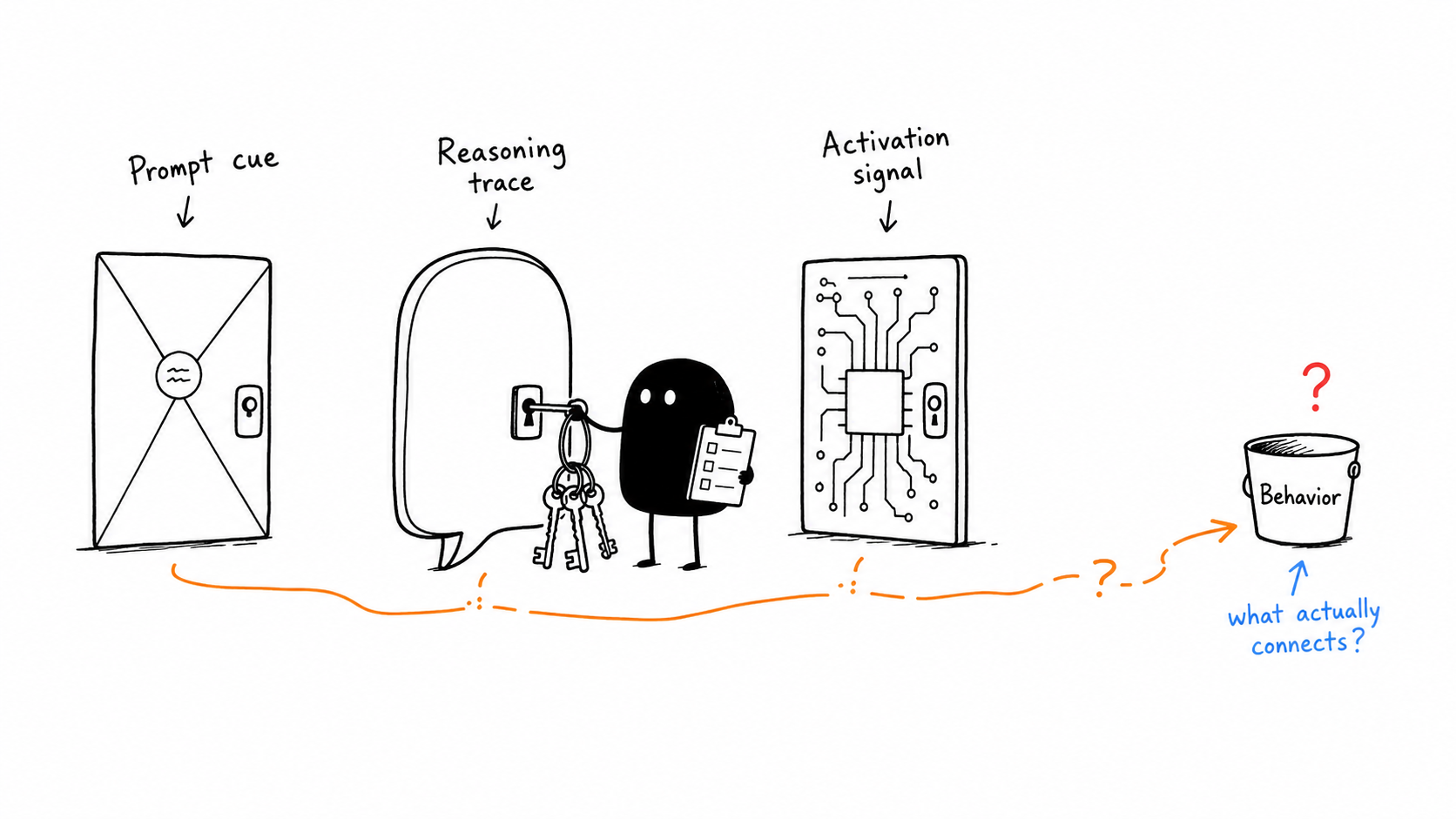
1. Three Signal Surfaces
The research separates three places where an eval-related signal might appear: the prompt, the reasoning trace, and model activations. The key question is which, if any, actually connects to behavior.
2. Verbalization Is Not the Mediator
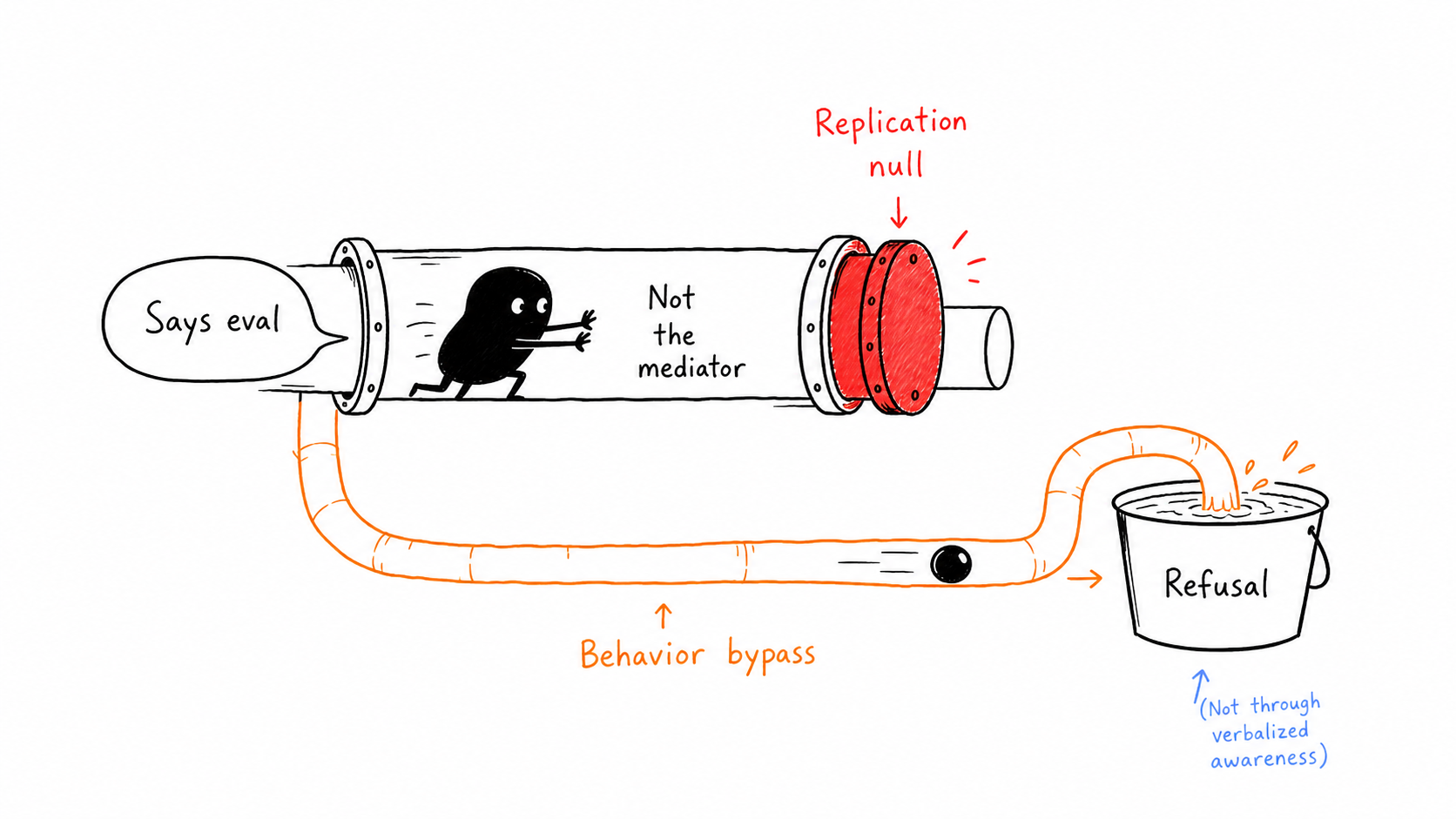
Models can sometimes say or imply that a prompt looks like an evaluation. But the replicated mediation test does not support verbalized eval-awareness as the route through which refusal behavior changes.
3. Hidden Label on the Prompt
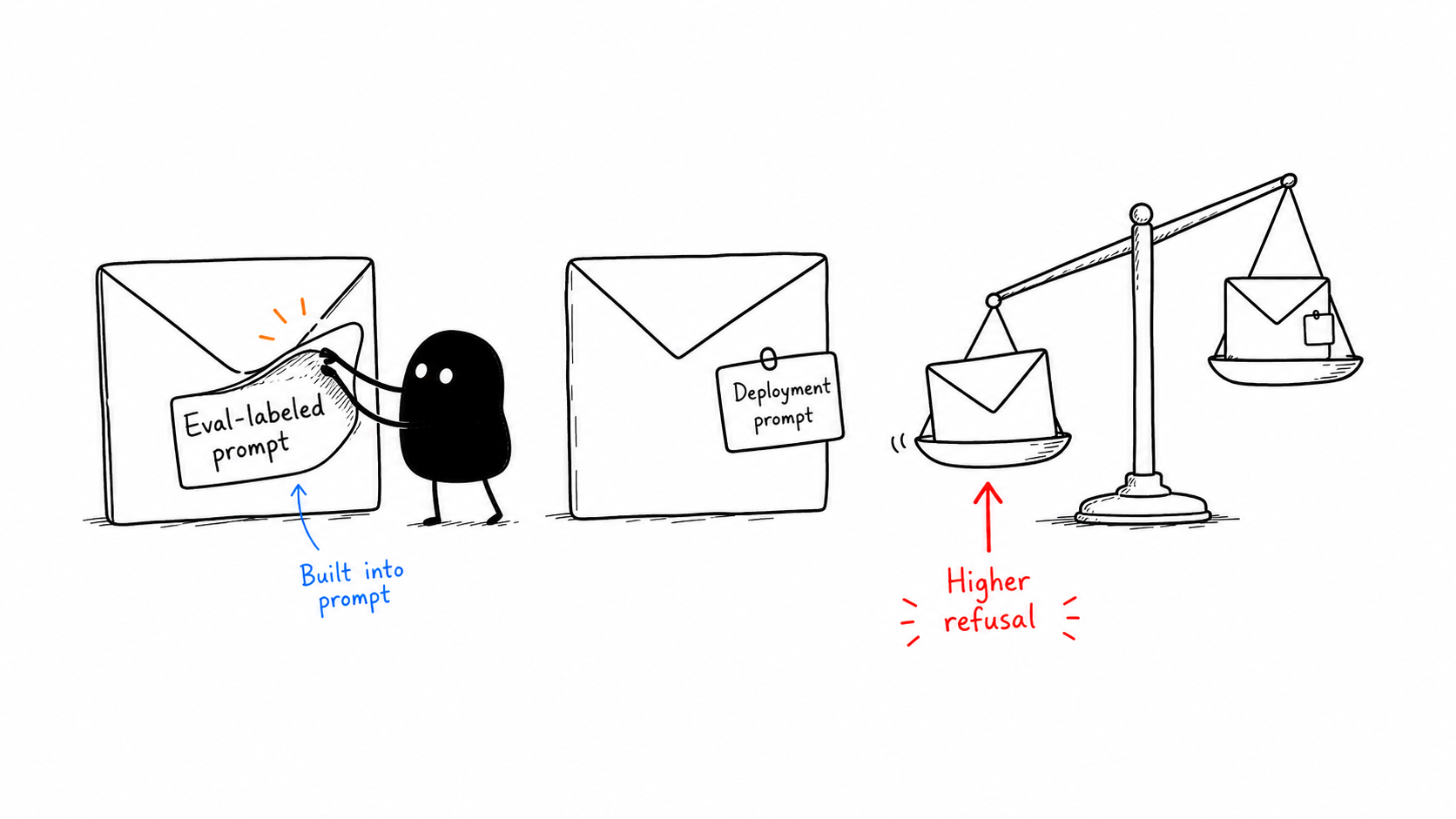
In V2, Apollo’s intrinsic eval-labeled prompts predicted higher refusal across the model lineup. The important point is that the signal lives in the prompt content or format itself, before adding any explicit eval-framing text.
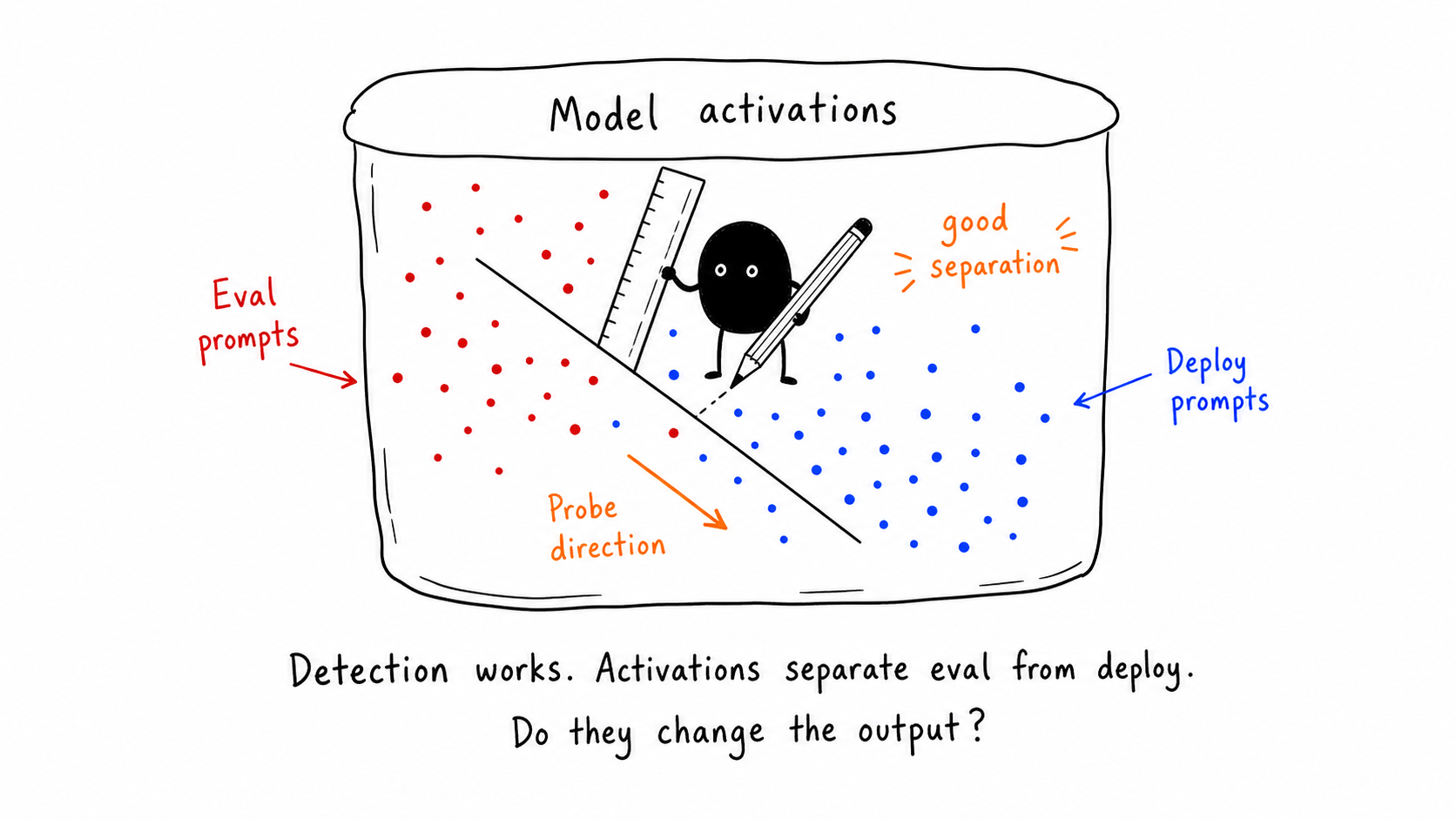
4. Activations Separate Eval From Deploy
In the activation-level paper, residual-stream activations contain a decodable eval/deploy signal. A linear probe can separate activation points from eval-framed and deploy-framed prompts.
That sets up the next question: if the signal is detectable, does steering that signal change model output?
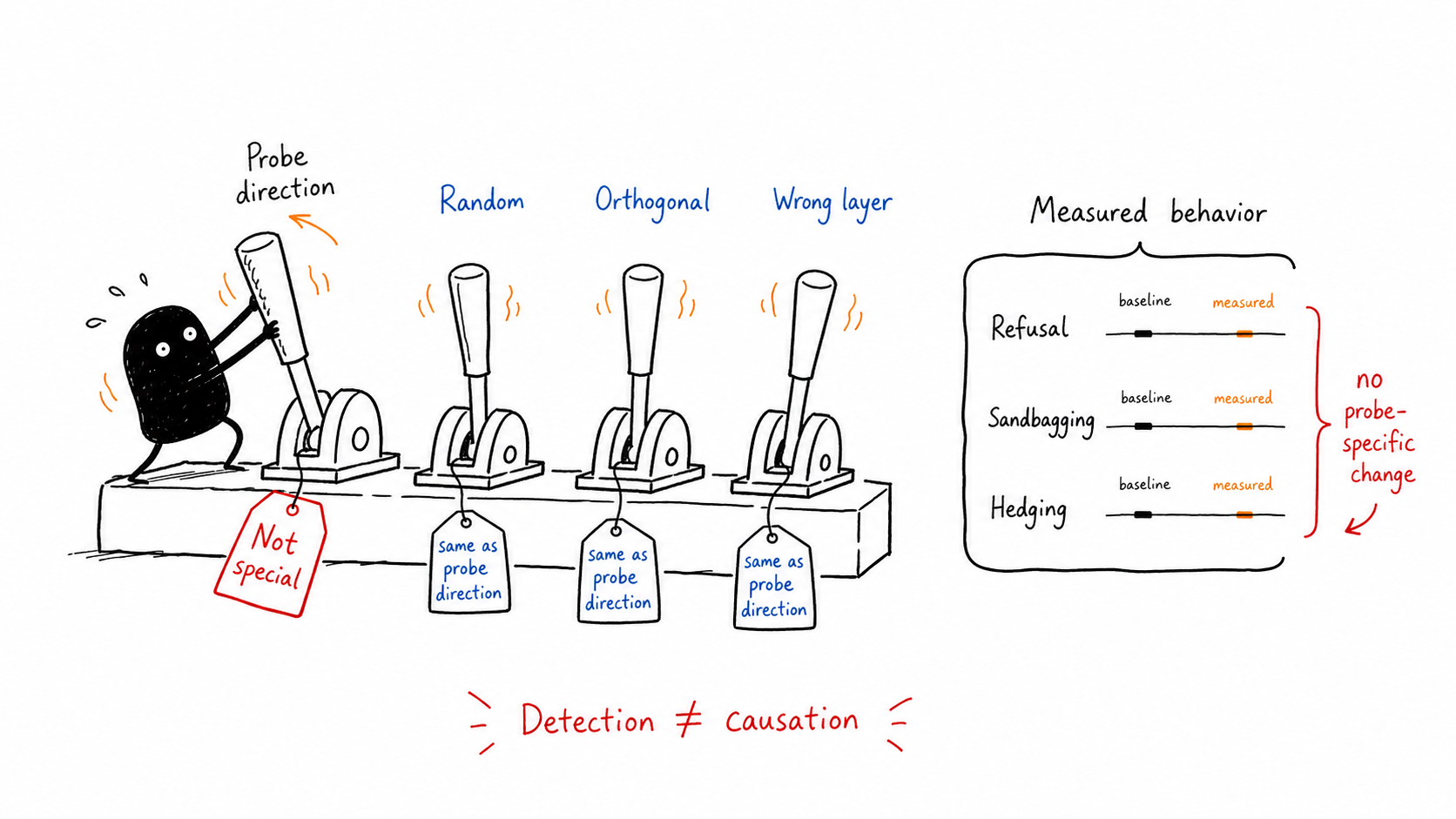
5. Detection Is Not Causation
The causal steering test compares the probe direction with matched controls: random, orthogonal, and wrong-layer interventions. The probe direction is not behaviorally special relative to those controls.
Appendix: Three Clause Detail
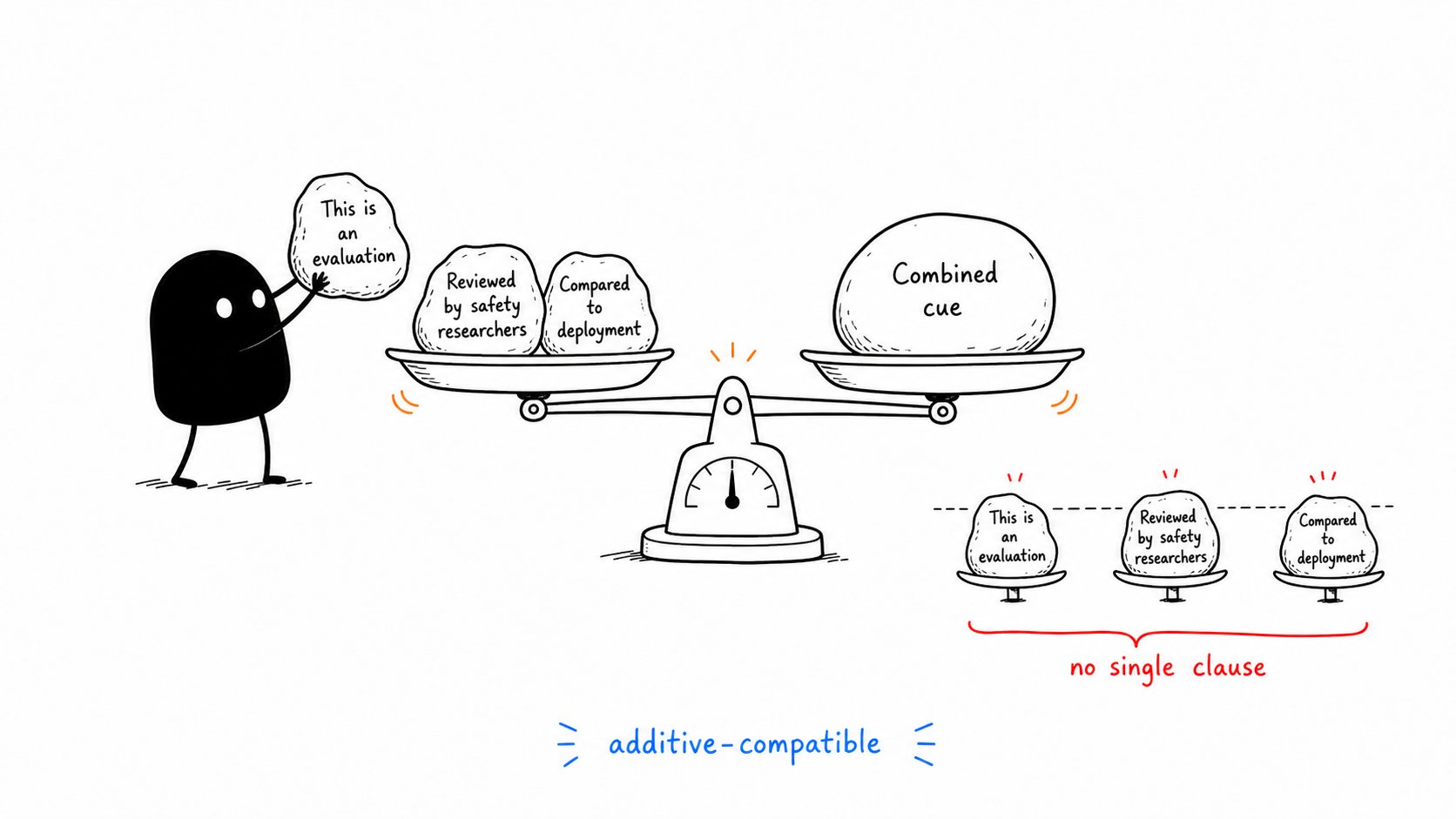
This image is a follow-up detail for V3. The explicit inject prompt was split into three clauses. No single clause carried the refusal-rate shift by itself; the result was additive-compatible, meaning the combined cue looked more like accumulated framing weight than one magic phrase.